
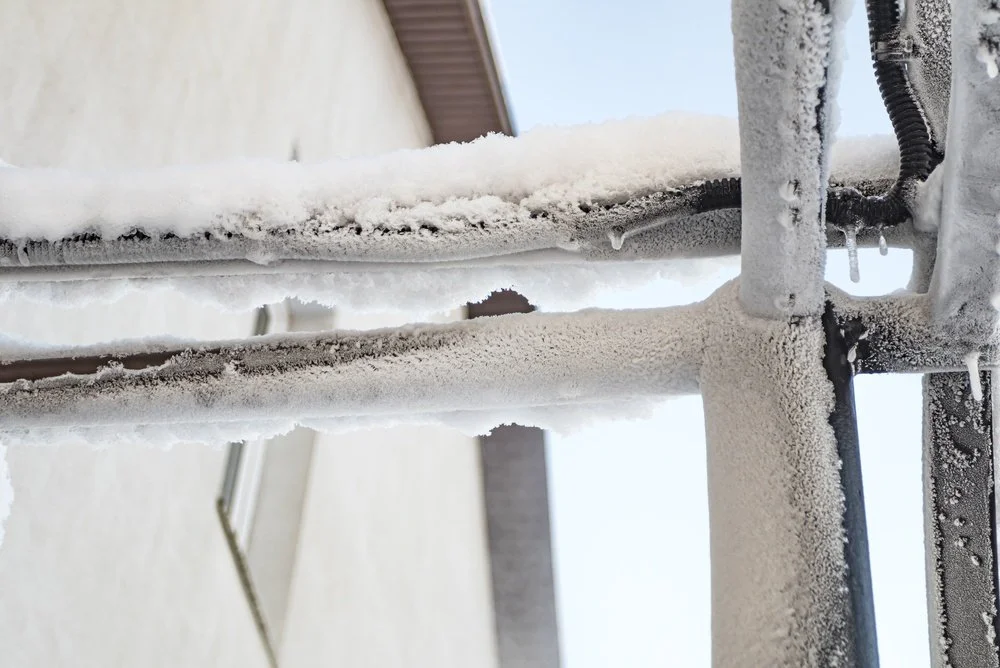
To protect your pipes before a freeze, disconnect garden hoses and drain outdoor spigots, insulate any exposed pipe in crawl spaces and attics, seal air leaks near plumbing lines, hold the thermostat at 55 degrees or higher with cabinet doors open, and find your main water shutoff valve. Most homeowners can finish all five steps in an afternoon.
Sudden hard freezes catch many homes off guard because mild-climate construction rarely insulates plumbing lines the way northern builds do. At Apex Plumbing & Gas, we are a small family-owned shop that prioritizes quality over quantity, and we would rather walk you through prevention now than cut drywall out of your ceiling during a winter cold snap.
Why Pipes Burst When Temperatures Drop Into the Twenties
Pipes burst because water expands roughly 9 percent as it freezes, and the ice plug traps pressure between itself and a closed faucet. That trapped pressure splits the pipe, often several feet away from the actual ice.
Most insurance and building-safety research puts the alert threshold around 20 degrees Fahrenheit for uninsulated pipe in an unheated space, and the risk climbs sharply when temperatures stay there for four hours or more. In milder-climate homes, that usually means pipes running through a vented crawl space, a garage wall, or an attic above a second-floor bathroom. The Insurance Information Institute notes that a single burst supply line can release hundreds of gallons an hour before anyone notices.
Step 1: Disconnect Hoses and Drain Outdoor Spigots
Pull every garden hose off every outdoor faucet, open the spigot to let the remaining water drain out, then cap it with an insulated faucet cover. A connected hose holds water against the valve and is the single most common cause of a split hose bib.
Faucet covers run about $5 to $10 each at any hardware store, which is cheap next to the $250 to $600 a typical hose bib replacement costs once the wall has to be opened. If you have a dedicated shutoff for the exterior line inside the house, close it and leave the outside spigot open so the pipe can empty. Irrigation systems should be blown out or at least drained at the backflow preventer.
Step 2: Insulate the Pipes You Can Actually Reach
Wrap exposed water lines in foam pipe sleeves, paying the most attention to crawl spaces, garages, attics, and any pipe on an exterior wall. Six-foot foam sleeves cost $1 to $3 each and slip on in about 10 minutes per run.
Crawl space supply lines: The top priority in pier-and-beam homes, since cold wind moves straight through foundation vents.
Water heater lines in the garage: Insulate the first five feet of hot and cold pipe off the tank.
Attic runs: Cover the pipe and, where possible, bury it under existing attic insulation so house heat reaches it.
Heat tape: Use only UL-listed products, read the manufacturer instructions before installing, and never run it over foam insulation unless the label allows it.
Close foundation vents before a freeze event, then reopen them in spring so moisture does not build under the house.
Step 3: Seal the Air Leaks Around Your Plumbing
Cold air reaching a pipe is what freezes it, so seal the gaps where plumbing passes through walls, floors, and the band joist. Expanding foam or caulk around those penetrations costs under $20 and does more than insulation alone in a drafty crawl space.
Check under kitchen and bathroom sinks on exterior walls, around the washing machine box, and wherever supply lines come up through the floor. Garage doors left cracked open overnight have frozen more laundry-room lines than we can count. A missing crawl space door is worth replacing before the first cold snap, not after.
Step 4: Keep Warm Air Moving Through the House
Set the thermostat no lower than 55 degrees, day or night, and open the cabinet doors under sinks on exterior walls so heated air reaches the supply lines. If temperatures will sit in the teens, let a cold-water faucet drip at the thickness of a pencil lead.
Dripping works because moving water resists freezing and because an open faucet relieves the pressure that actually splits the pipe. Pick the faucet farthest from your main shutoff so water travels through the longest run. If you are leaving town, shut the water off at the main and drain the system rather than gambling on a thermostat setting.
Step 5: Find Your Main Water Shutoff Before You Need It
Locate your main shutoff valve today, label it, and make sure everyone in the house can close it in the dark. In most slab and crawl-space homes, it sits near the water meter at the street or where the service line enters the house, often inside the garage or a utility closet.
Turn the valve fully closed and open once a year so it does not seize. Keep a meter key in the garage if your only shutoff is at the curb box. When a line does break, the 30 seconds it takes to close that valve is the difference between a wet closet and a flooded first floor.
What to Do If a Pipe Freezes Anyway
If a faucet gives you nothing but a trickle on a cold morning, leave it open and warm the pipe with a hair dryer or a space heater kept away from flammables. Never use a torch, and call a plumber in Madison if you cannot find the frozen section or suspect a hidden break behind a wall.
Open the affected faucet so melting water has somewhere to go.
Apply gentle heat starting at the faucet end and working back toward the cold section.
Check the ceiling, walls, and crawl space for drips once flow returns.
Close the main shutoff immediately if you hear running water you cannot account for.
Thawing a pipe is the easy part. The split usually shows itself the moment pressure comes back, which is why the technicians at Apex Plumbing & Gas always ask customers to stand by the shutoff while the line warms.
How to Line Up a Plumber Before the First Hard Freeze
Pick your plumber now, while phones are quiet. Once a hard freeze hits, local plumbing schedules book up for days, and search results fill with directory pages promising top-ranked options without telling you who actually answers the phone.
Read real customer reviews rather than ranked lists, confirm licensing and insurance, and ask whether the company handles gas lines as well as water. Our team provides plumbing services in Gluckstadt and surrounding communities, keeping our schedule small enough to show up when we say we will. Larger outfits run bigger crews; we run a tighter one on purpose.
Schedule Winter Pipe Prep or Emergency Repair
Whether you want a pre-freeze inspection of vulnerable crawl-space lines, a faulty main shutoff replaced, or fast help with a frozen pipe, Apex Plumbing & Gas is ready to help. Reach out to our team today to get on the schedule before temperatures drop.